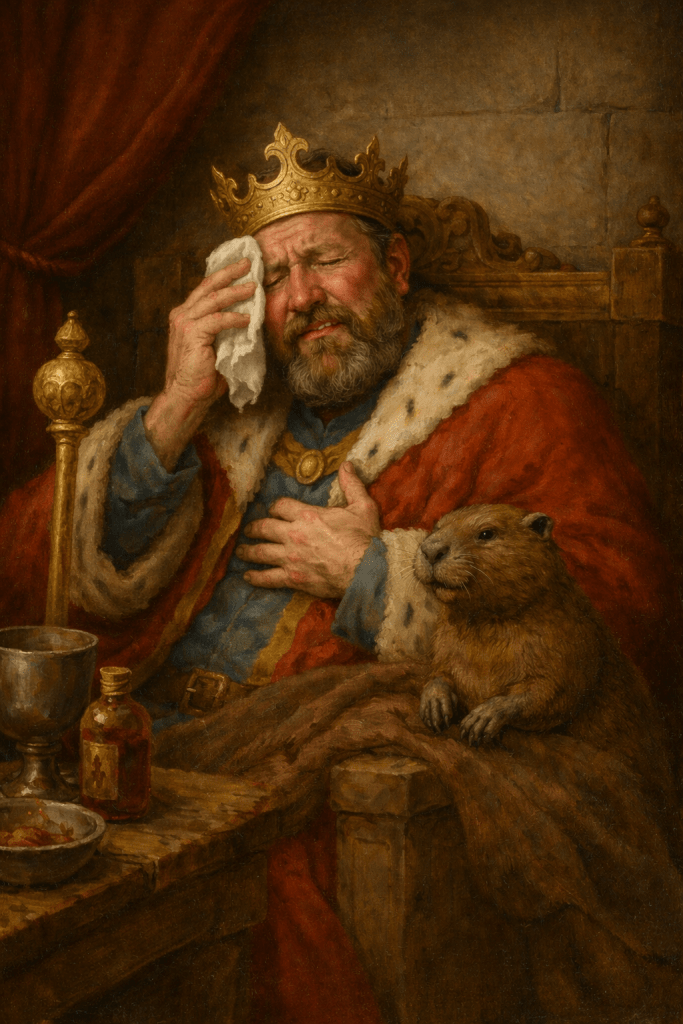
In Beaverton, illness was not merely a matter of the body. It was a matter of use.
There existed a recognized form of suffering, rarely named and widely understood, by which distress could interrupt proceedings and weakness could suspend consequence. This condition came to be known as Ceremonial Frailty. It was not defined by symptoms, but by effect.
Vast Sister experienced fear as it came to her. When she believed herself unwell, she believed it fully. Her distress arose without planning and offered no leverage. It narrowed her world, exhausted her, and diminished her standing. Nothing paused on her account.
King Robert understood suffering differently. When he declared himself unwell, it was with intention. His ailments were shaped for witness. He knew precisely how illness rearranged attention within a hierarchy and how quickly concern replaced scrutiny.
What appeared, to the inattentive, as shared frailty was nothing of the kind.
Vast Sister’s fear cost her clarity, rest, and dignity.
Robert’s illnesses paused everything.
Over time, his afflictions became familiar enough to be named in the Solipsian record. What follows are only a few of those set down formally, not the full account.
There was The Pressing of the Crimson, a condition said to drive the blood upward toward the crown itself, rendering exertion unwise and dissent dangerous. It appeared most reliably when labor or restraint was expected and receded during feasts, hunts, and prolonged speeches delivered without pause.
There followed The Forty-Eight Hour Drooping, a sudden facial imbalance declared irreversible at dawn and entirely resolved by the second sunset. Though brief, it was thereafter cited as proof of lasting fragility.
Next came The Stillness of the Left Half, proclaimed as a grave bodily seizure requiring immediate cessation of all duties. No impairment endured. The account did.
Pain later migrated to the joints in the form of The Wandering Joint Curse, which settled wherever effort was required and lifted when it was not. Standing too long became dangerous. Repetition was discouraged. Rest was endlessly prescribed.
During a season of wider sickness, the king announced The Radiant Cleansing, a treatment described as both innovative and perilous. No physicker ever recorded administering such a measure, though several were summoned to affirm its seriousness.
The Greased Liver Complaint followed, blamed for fatigue, fog, and irritability. Physickers noted no impediment to appetite. It often impeded inquiry.
There was a Crown-Clutching Event, spoken of afterward as a narrowly survived failure of the heart. Accounts varied. No regimen followed.
A blemish upon the king’s face became The Face Blight, whispered to be deadly, then conquered, then recalled only when sympathy waned.
He later proclaimed the Solemn Orthotic Decree, insisting only custom crafted boots could prevent further decline. These were worn selectively and abandoned entirely during ceremonial rides and hunts.
At the armory, injuries were frequent. Sprains, strains, sudden wounds, collectively known among the workers as the Armory Afflictions, appeared precisely when labor was heaviest and resolved before leisure began. A twisted wrist when the forge ran long. A bruised shoulder when lifting was required. A sudden limp when inspection turned toward effort. No injury lingered. No physicker was ever summoned for follow up.
Among the men who worked steel for a living, the pattern required no diagnosis. When word came down that the king had injured himself again, no one asked where or how. They only said, “Wind tongued Robert’s off to the midwife again.”
Physickers were summoned throughout these seasons. They observed. They recorded symptoms. Remedies were offered and declined. What mattered was not cure, but interruption.
This fluency did not arise by accident. King Robert learned the origins of these deceptions from the Dowager Queen. Her suffering had been real, though often invited. She placed herself in harm’s way and remained there until victimhood became her safest position. Abuse, once endured, became her proof. Injury was the role she knew how to occupy, and she occupied it completely. From her, Robert learned not how to suffer, but how suffering functioned.
He watched how pain halted confrontation, how visible weakness silenced inquiry, how once harm was declared the room reorganized itself around it. What he did not inherit was her damage.
Where the Dowager Queen endured harm and then made use of it, Robert dispensed with harm altogether. He kept the display and discarded the cost.
Her strategy was victimhood. His was Ceremonial Frailty.
And yet, of all the ailments King Robert claimed, there was only one he truly suffered. It would arrived without announcement.
It was Gout.
Known plainly among physickers as the Fat Man’s Disease, it came not from drink, which the king did not touch, but from rich tables, second helpings, exemption from restraint, and a life carefully protected from hunger, labor, or consequence.
It did not pause proceedings, soften inquiry, or elevate his standing.
It merely hurt.
For this reason alone, it was mentioned less often than any other condition. It did not stop the day.
Extract from the Medical Record of King Robert of Beaverton
Prepared by Alderic Fenrow, Senior Physicker
Prefatory Note
The following entries are selected from the king’s health file. They represent common patterns of presentation rather than a complete accounting.
On Pressure of the Blood
The king reports pressure in the head and chest during periods of required exertion. Pulse remains strong. Color good. Appetite unimpaired.
Moderation of salt and portion advised. Declined.
Rest requested. Granted. Symptoms resolve.
On Facial Imbalance
The king reports sudden facial imbalance upon waking. Speech unaffected. Eyes clear. No droop observed at second examination.
All symptoms resolved by the second sunset.
The king later refers to this episode as permanent damage.
On Bodily Stillness
The king reports sudden inability to continue duties. No loss of movement observed. Grip equal. Balance intact.
Cessation of proceedings requested. Granted.
Symptoms not present the following day.
On Pains of the Joints
The king reports pain in knees, hands, and feet. Location varies by task. Pain absent when seated.
Movement and moderation advised. Declined.
Rest requested. Granted.
On Claimed Radiant Treatment
The king reports completion of an advanced and perilous treatment during a season of sickness.
No such treatment administered by any physicker. No instruments requested. No aftereffects observed.
Entry recorded as reported.
On Complaints of the Liver
The king reports fatigue and irritability attributed to the liver. No discoloration observed. Appetite remains substantial. Second and third servings noted.
Reduction of rich foods advised. Declined.
On Distress of the Heart
The king reports a near fatal event of the heart. Details vary between tellings. No collapse witnessed.
No change in habit followed.
On Facial Blemish
A blemish observed on the cheek. No spread noted. No intervention requested beyond observation.
Later described by the king as conquered illness.
On Requirement of Special Footwear
The king reports inability to stand without custom boots. Footwear commissioned. Worn selectively.
The king observed standing and riding without difficulty when unshod.
On Injuries at the Armory
The king reports frequent strains and sudden pains during visits to the armory. Complaints arise during periods of labor and resolve before leisure.
No swelling observed. No follow up requested.
On Gout
Pain and swelling observed in the foot. Heat present. Tenderness confirmed. Recurrence noted.
Reduction of portion and simpler fare advised. Declined.
No accommodation requested. No ceremony observed.
Closing Note
The king presents often. Recovery is rapid when rest is granted. Treatment is rarely accepted.
Of all conditions recorded, gout alone persisted without regard for attention.
Filed and sealed.
Alderic Fenrow, Senior Physicker.
 The Beaver King, Cautionary Tales of Medieval Dysfunction
Leave a comment